Skip to content
Elite Service Solutions

Sealant Services for Tampa Bay Facilities

Concrete, paver, marble and travertine sealing for industrial, commercial and HOA properties. Done after the wash, specified to the surface, and on a cycle you plan rather than react to.

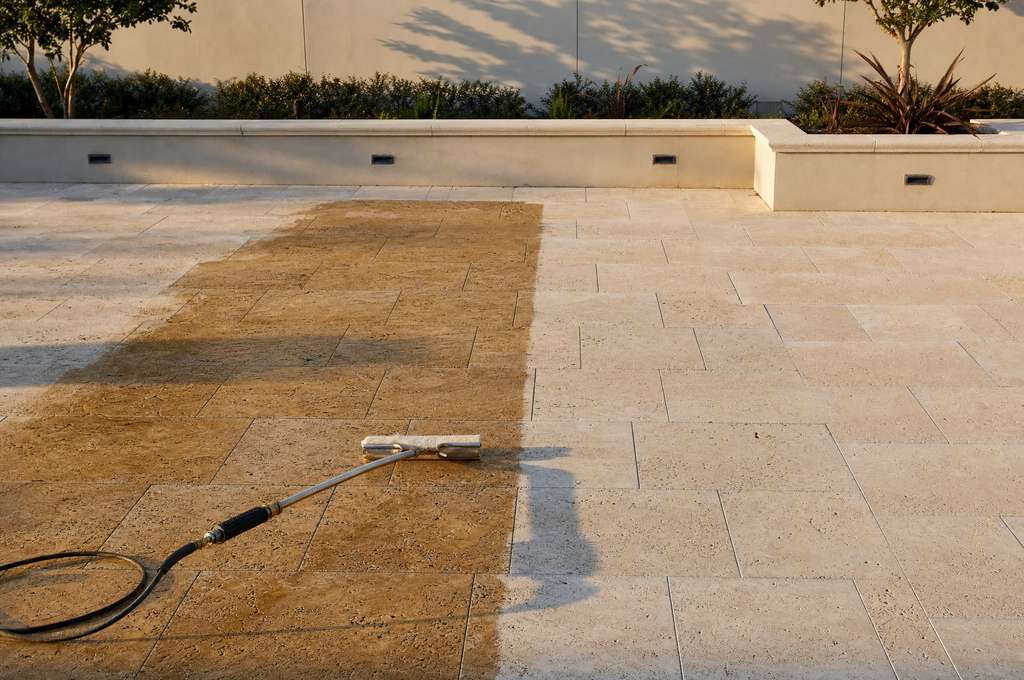
Wet-look sealer freshly applied across travertine pavers, meeting the dry unsealed stone along a clean edge

Commercial sealant services are what protect and maintain your investment. We seal concrete, pavers, marble and travertine across Tampa Bay: entries, walkways, plaza hardscape, pool decks, courtyards and warehouse floors. It usually runs as the second half of a wash, not its own visit. Seal a surface that was never properly cleaned and you lock the problem underneath it.

Scopes covered

Concrete Sealing

Penetrating or film-forming sealer on walkways, entries, plaza flatwork and parking areas, specified for whether you want the concrete protected, or protected and darkened.

  • Surface washed and fully dry before sealer goes down
  • Penetrating or film-forming sealer specified to the result you want
  • Control joints and edges cut in
  • Cure time confirmed before the area reopens
Water beading on a freshly sealed wet-look section of broom-finished concrete

Paver Sealing and Joint Stabilization

Paver sealing with joint sand stabilization, so the surface resists staining and stops shedding sand, shifting and growing weeds through the joints.

  • Pavers cleaned and efflorescence treated
  • Joint sand replaced and stabilized
  • Sealer taken into the joint as well as across the face
  • Cure and reopening time confirmed in advance
Grey concrete pavers in a running bond under a cured sealer, joints filled flush

Marble Sealing

Marble sealed with a penetrating impregnator suited to calcareous stone, on entries, lobbies and courtyards where an acidic cleaner would etch the surface.

  • Penetrating impregnator suited to calcareous stone
  • Polished and honed finishes treated as different jobs
  • Existing residue, etching and dulling reported before work starts
  • Nothing acidic used on the surface at any stage
Polished marble floor under a cured sealer, gray veining and an even sheen

Travertine Sealing

Travertine sealed on pool decks, patios and courtyards, where the pitting in the stone holds soil and the surface has to stay slip-safe once it is wet.

  • Sealer matched to the finish, filled or unfilled
  • Pitting and lost joint fill reported before work starts
  • Coverage taken into the pits and out to the grout line
  • Salt air and pool chemistry allowed for in the reseal interval
Travertine floor slab under a sealed sheen, natural pitting and veining visible

Resealing and Maintenance Cycles

A planned reseal cycle instead of a rescue job. Washed and recoated before the existing sealer fails, which avoids the stripping a neglected surface needs first.

  • Condition of the existing sealer assessed and reported
  • Washed down and recoated before the sealer fails
  • Reseal interval set against the surface and its exposure
  • No stripping, because the surface never got that far
Worn traffic lane in a concrete sealer beside a freshly resealed glossy section

Sealant Services — common questions

Why is sealing quoted separately from the wash?

Cleaning concrete or pavers without sealing them buys about a season. A sealer slows re-soiling, resists oil and rust staining, and on pavers holds the joint sand so the surface stops shifting and weeds stop coming through the joints. One approach means an annual repeat. The other means a schedule you control.

We price and scope it separately for one reason. The surface has to be clean and properly dry before anything goes on it. Seal damp concrete and you trap moisture under the film; it blushes cloudy white, and someone has to strip it and start over. On a wash-and-seal job that means a return visit, not one long day, and a contractor who promises both in a single afternoon is telling you something about the result.

Do you have to pressure wash before sealing?

Yes, always. A sealer locks in whatever is underneath it, so sealing over algae, oil or embedded dirt makes the problem permanent and visible through the finish. The surface also has to be properly dry. Sealing damp concrete traps moisture and produces a cloudy blush that has to be stripped and redone.

Is sealing pavers worth it?

On a commercial property, usually yes, and the calculation is about maintenance rather than looks. An unsealed paver field is a surface on its way to re-sanding: once the joints empty, the field starts to move, weeds and ants take the gaps, and stains that a sealed surface would rinse off become permanent. The question is not whether sealing works but where it pays. Full sun, vehicle crossings, pool decks and entries earn it fastest, while a shaded low-traffic path may not justify the cycle. The one honest case against is a surface that needs restoration first — a sealer makes the current state permanent, good or bad.

How do you choose the right sealer for a surface?

These are four different jobs sharing a name. Concrete flatwork takes a penetrating silane or siloxane that repels water and staining without changing the look, or a film-forming acrylic where someone wants the wet, darkened finish. Pavers want a sealer that stabilises the joint sand as well as protecting the face. Marble and travertine are calcareous stone, porous and reactive to acids, so they take a penetrating impregnator. The acidic cleaners that are fine on concrete will etch them permanently.

So we quote by surface, not by square foot alone. A plaza with concrete walkways, a paver entry and a travertine pool deck is three specifications on one site, and running one product across all three is the most common way a sealing job fails.

  • Concrete: penetrating silane or siloxane, or an acrylic where a wet look is wanted
  • Pavers: joint sand stabilization as well as surface protection
  • Marble and travertine: penetrating impregnator, never an acidic cleaner
  • Pool decks and coping: slip resistance is written into the specification
Can you seal marble and travertine, or only concrete?

Both, on different specifications. Stone is porous and reactive to acids, so it takes a penetrating impregnator rather than the acrylic that suits concrete, and it must never see the acidic products that are fine on flatwork. Pool decks and courtyards on Gulf coast properties are usually one or the other.

How long does concrete or paver sealing last in Florida?

Less than the product label suggests, because ultraviolet exposure, heat and rainfall all shorten it. Horizontal surfaces in full sun need attention soonest, shaded and covered areas last considerably longer, and coastal properties sit at the harsh end. We would rather look at the surface and tell you where it is in its cycle than quote a number that does not fit your property.

There is a check anyone can run in ten seconds: pour water on the surface. If it beads or sits, the sealer is still working. If it soaks straight in and the surface darkens, protection is gone and the reseal window has arrived.

Why does resealing on a planned cycle cost less?

Ultraviolet exposure, heat and rainfall all shorten a sealer's working life here, so the cycle runs shorter than the label on the drum suggests. Horizontal surfaces in full sun go first. Shaded and covered areas last considerably longer. Coastal properties sit at the harsh end, because salt exposure on the barrier islands weathers hardscape faster than anything inland.

Resealing is a maintenance line item, not a one-time purchase, and it is cheapest when planned. A surface resealed on cycle needs a wash and a coat. A surface left until it visibly fails needs stripping first, which costs more than the two reseals that were skipped.

Will sealing make our walkways slippery?

It can, if the wrong product is used. That is why slip resistance is written into the specification for any surface people walk on wet, especially pool decks, entries and ramps. Penetrating sealers barely change the surface texture. Film-forming ones can, so where they go down on foot traffic an anti-slip additive goes in with them.
What else is commercial sealing called?

The trade uses several names for the same work, and all of them describe what this page covers. What changes a quote is the building, never the phrase.

  • commercial sealing services
  • concrete sealing
  • paver sealing
  • marble sealing
  • travertine sealing
  • natural stone sealing
  • concrete sealer
  • paver sealer
  • sealing contractor
  • pool deck sealing
  • resealing service

Facility types

Where sealing is available — 32 cities

Other services

(727) 245-0123 Book a walkthrough
Book a walkthrough