
Commercial Cleaning for Fitness and Recreation Facilities
Cleaning for gyms and fitness centers, where preventing skin infection is the priority and proper disinfectant contact time is what makes the difference.
- Proper disinfectant contact time
- Locker rooms and showers covered
- Safe, correct cleaning for athletic flooring
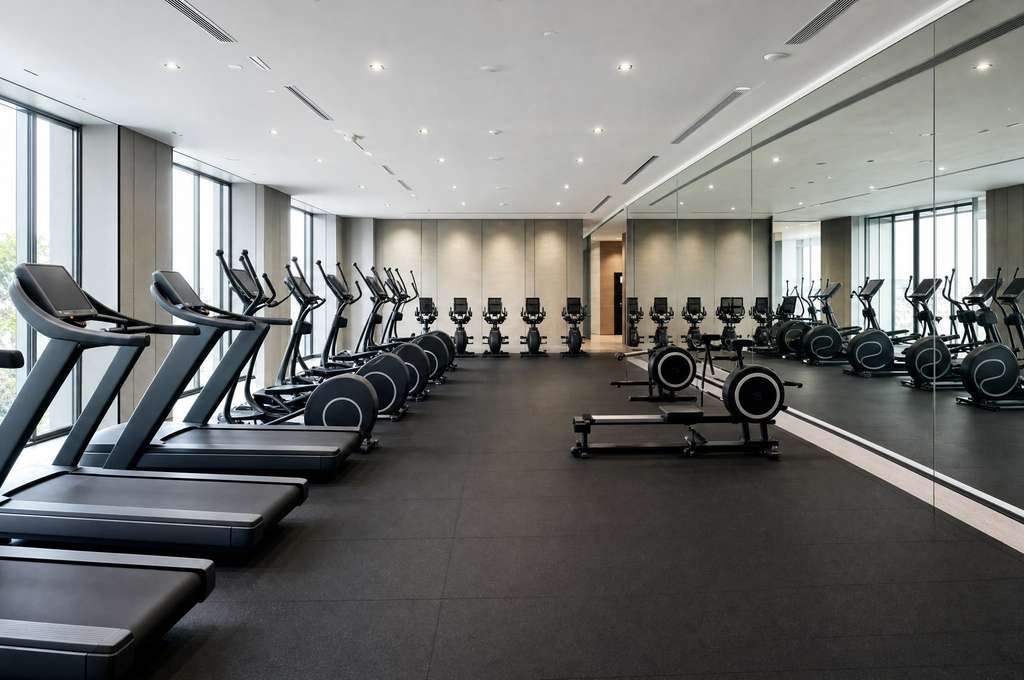
Gym cleaning is a disinfection problem wearing a cleaning problem's clothes. What members worry about is skin infection from shared equipment and mats, and the one thing that determines whether disinfection actually worked is whether the labeled contact time was honored. Wiping a surface dry too early accomplishes essentially nothing.
Facilities we service
-
-
-
-
-


Contact time decides whether disinfection worked
Every disinfectant carries a labeled dwell time, and the surface has to stay visibly wet for that whole period to achieve the claim on the bottle. A crew moving fast with a cloth in each hand dries the surface in seconds and leaves a gym that looks clean and is not disinfected.
- Products are EPA-registered, and we can give you the registration number and the claims it is listed for.
- Visibly soiled surfaces are cleaned before they are disinfected, because disinfectant over sweat and skin oil does very little.
- The crew works to the label rather than to the pace that finishes the room fastest.
- High-touch equipment needs attention through the operating day. A gym cleaned only at 11pm is carrying the whole day's load by noon.
Floors and locker rooms are separate scopes
Rubber and sprung athletic flooring is chemical-sensitive, and the wrong stripper destroys it permanently. Any floor-care scope in a fitness facility names the substrate before it names a method.
- Rubber, sprung timber, turf and hard floor each identified, then quoted on their own method.
- Locker rooms and showers priced separately, because they are a mold and drain-maintenance problem rather than a wipe-down.
- Drains, grout and shower fittings on a cycle that assumes standing humidity.
- Studio and free-weight areas, where mats and upholstery take more skin contact than the machines do.
What a gym cleaning scope covers
Members judge a fitness center on the equipment they touch and the room they change in. Both belong in the scope in writing, at a stated frequency.
- Cardio and resistance equipment: handles, benches, consoles, frames and undersides.
- Mats, functional-training rigs and free-weight racks.
- Locker rooms, showers, toilets and sauna or steam surrounds.
- Reception, retail counter, childcare area and any studio or spin room.
- Periodic deep work: upholstery, machine frames, drains and the corners a daily pass never reaches.
Gym & Fitness Cleaning questions we get asked
How often should a gym be cleaned?
On three clocks at once. High-touch equipment — handles, benches, mats, cardio consoles — needs attention multiple times through the operating day, not once at night. The floor, locker rooms and showers need a daily professional pass. And the deep work runs weekly to monthly: machine frames and undersides, upholstery, drains, and the corners a daily wipe never reaches. Member perception runs on the first clock and infection control on all three. A gym that concentrates its cleaning at 11pm looks clean at 6am and is carrying the whole day's load by noon.
What kills MRSA on gym equipment?
An EPA-registered disinfectant with a listed staph or MRSA claim, applied so the surface stays wet for its full labeled contact time. The CDC's guidance for athletic facilities adds the structural habits: clean visibly soiled surfaces before disinfecting them, use barriers on shared benches and mats, and keep wipes or spray available so members can cover the minutes between professional passes. When you vet a gym cleaning vendor, ask for the product's EPA registration number and its listed claims — a vendor who cannot name either is guessing.
How do you disinfect shared gym equipment properly?
By honoring the disinfectant's labeled contact time. The surface stays visibly wet for the full dwell period instead of being wiped dry immediately. It is slower than it looks, and it is the only part of the process that determines whether disinfection actually happened.
Can you clean rubber gym flooring without damaging it?
Yes, provided the substrate is identified before a method is chosen. Rubber and sprung athletic floors are chemical-sensitive and the wrong stripper causes permanent damage, so our floor scope names the surface explicitly.
Do you handle locker rooms and showers?
Yes, as a distinct scope. Showers and locker rooms are a mold and drain-maintenance problem rather than a wipe-down, and they are quoted separately from the equipment floor.