
Commercial Cleaning for Office and Professional Buildings
Nightly and weekly cleaning for professional offices, with documented key control and a crew that respects tenant property.
- Documented key control
- After-hours routes
- Consistent crew
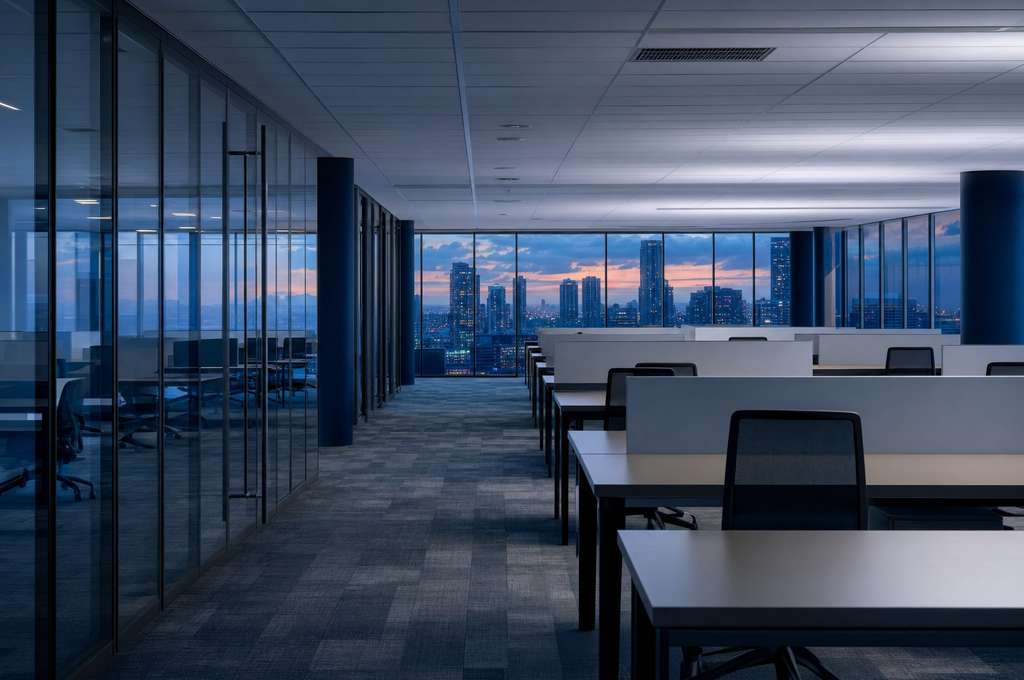
Office cleaning is bought on reliability and lost on inconsistency. We provide commercial office cleaning for professional buildings, single-tenant suites and multi-tenant floors across Tampa Bay, nightly or weekly or on whatever frequency the building genuinely needs.
Facilities we service
-
-
-
-
-
-
-
-
-
-


Access is the part that goes wrong
After-hours office cleaning means keys, fobs, alarm codes and sometimes badge access for people who arrive when the building is empty. Tenant complaints trace back to a detail in that chain far more often than to the standard of the cleaning itself.
- A key-control procedure written for your building: who holds what, where it is stored, how it is returned, who gets called on an alarm.
- The same crew each visit, so access habits are learned once instead of relearned every few weeks.
- Multi-tenant floors worked to the landlord's rules, including tenant notification, service-lift use and any escort requirement.
- Clean-desk and confidentiality expectations honored in legal, accounting and title offices, where they apply to the cleaning crew as much as to staff.
What a commercial office cleaning scope covers
The entry, the restrooms and the break room set how the whole building is judged, in that order. Everything else on the checklist matters less than those three being right every night.
- Entry and lobby: glass, walk-off matting, hard floor or carpet, reception surfaces.
- Workstations and private offices: surfaces dusted, bins emptied, floors vacuumed or dust-mopped.
- Conference rooms reset: tables wiped, chairs squared, whiteboards and AV surfaces left ready for the morning.
- Break rooms and kitchens: counters, sinks, appliance exteriors, tables and floors.
- Restrooms: fixtures, dispensers restocked, floors machine-cleaned rather than mopped over.
- Common corridors, lift interiors and stairwells on the same route.
Where an office scope is usually underpriced
Some work gets folded into a nightly rate that cannot carry it. It surfaces around six months in, when the building starts looking tired on a contract that is technically being met.
- Carpet extraction and hard-floor refinishing, which are periodic work with their own equipment and their own cycle.
- High dusting above ordinary reach: vents, light fittings, ledges and the tops of partitions.
- Entry glass at the frequency a customer-facing lobby needs, rather than weekly by default.
- Day porter cover, where public traffic means the restrooms have to be held through the working day.
Commercial Office Cleaning questions we get asked
How do you handle keys and alarm codes for after-hours cleaning?
Through a documented key-control procedure written for your building: who holds what, how it is stored, how it is returned, and who is notified for alarm events. It is specific to the site rather than a generic policy, because the failure mode here is always a detail unique to one building.
Can you clean a multi-tenant floor without disturbing other tenants?
Yes. Multi-tenant work is scheduled to the building's rules, including tenant notification, service-lift use and any loss-prevention or escort requirements the landlord applies.
How often should an office be cleaned?
Most offices land on nightly or three-nights-weekly. Headcount and restroom load drive the right answer, not square footage. A busy 4,000 sq ft office generates more work than a sparse 10,000 sq ft one.
How much does office cleaning cost per month?
Published guides such as Building Stars put monthly office cleaning between roughly $600 and $1,000 for small suites, rising past $3,000 above 20,000 square feet — ranges wide enough to show that floor area alone is not the price. Frequency is the bigger lever, because a building on a frequent schedule never has ground to recover, and restroom count and floor types move the rest. We put a number on a specific building after walking it, as a written monthly figure against a written scope, so you can see what a cheaper bid would be leaving out.