
Commercial Cleaning for Retail and Hospitality
Retail and shopping center cleaning where the entry floor and the glass decide what a customer thinks before anyone greets them.
- Floor care
- Before-open or after-close
- Common area or in-line
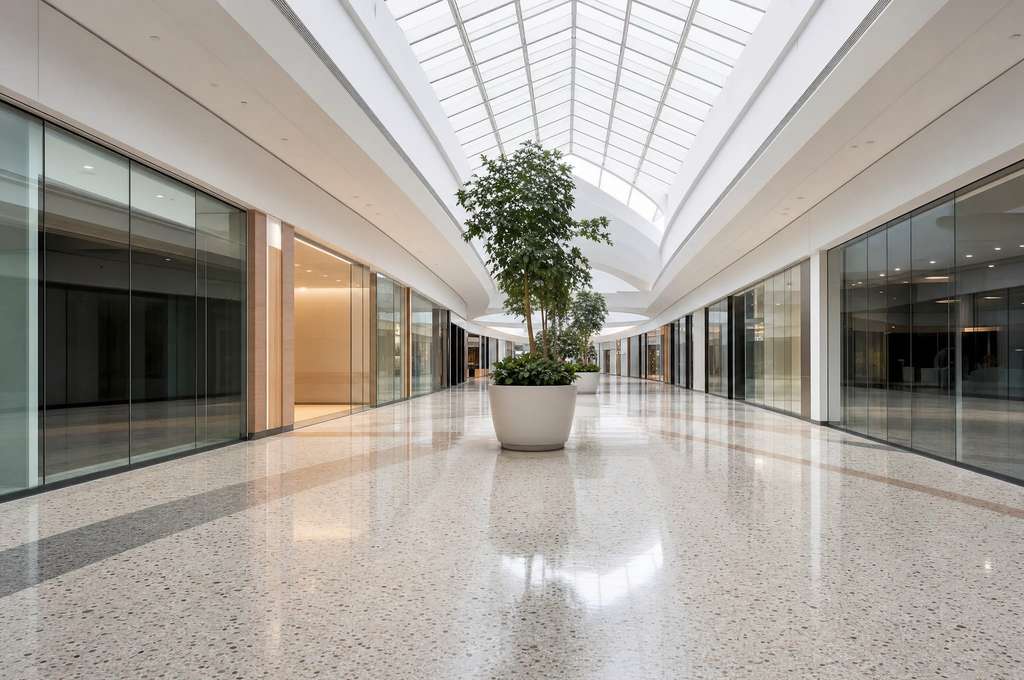
In retail, the floor is the first thing a customer reads. The entryway and the glass form an impression several steps before a word is spoken, which inverts the usual cleaning priorities. Floor care is not the quarterly extra here, it is the whole first impression, and a scope that buries it as an add-on is solving the wrong problem.
Facilities we service
-
-
-
-
-
-
-
-
-


Who is responsible for what in a multi-tenant center
Shopping centers split responsibility between common area and in-line tenant space, and the first thing to settle on any quote is which one is being priced. Get it wrong and you either pay twice or end up with a walkway nobody owns.
- Landlords normally carry common areas, walkways, restrooms and parking.
- Individual tenants carry their own units, and are quoted separately.
- Along U.S. 19 in Clearwater and Palm Harbor, and through Seminole City Center, most work is single-site managed across many tenants, so one relationship covers a lot of doors.
- Whichever side you sit on, the quote names the boundary in writing before work starts.
Scheduling and slip liability
Retail cleaning happens after close or before open, with loss-prevention and escort rules that vary tenant by tenant. Your landlord or insurer will eventually ask how wet work is documented, and the answer should exist before they ask.
- Wet-floor signage placed during and after wet work, not only while the crew is in the room.
- A record of what was cleaned and when, which is what a slip-and-fall claim asks for.
- Loss-prevention and escort rules followed per tenant rather than per center.
- Work timed so no customer meets a wet floor at opening.
What a retail cleaning scope covers
The entry floor and the glass are what a customer takes in first, several steps before anyone greets them. That is why floor care leads here and janitorial follows, which flips the usual priority order.
- Entry: glass inside and out, walk-off matting serviced, and the first ten feet of floor.
- Sales floor: dust-mopped or vacuumed, spot-cleaned, fixtures and checkout counters wiped.
- Fitting rooms, which are the most skipped area in retail and among the most touched.
- Restrooms serviced through trading hours, because customers judge them rather than staff.
- Stockroom, back-of-house and staff areas on their own frequency.
- Periodic: hard floors machine-scrubbed, carpet extracted, exterior walkways pressure washed.
Retail Store Cleaning questions we get asked
Do you clean common areas, individual stores, or both?
Both, but they are quoted separately because they are usually different customers. Common areas, walkways and parking are typically the landlord's responsibility, while in-line units belong to the tenant. We confirm which is being priced before quoting.
How often should a retail store be cleaned?
The sales floor daily: dust-mop or vacuum, spot-clean, checkout counters disinfected. Restrooms at least twice through trading hours, because a retail restroom is judged by customers rather than staff. Entry floor care runs harder than anywhere else in the building — walk-off mats serviced, hard floors machine-scrubbed weekly to monthly by traffic, carpet extracted on a cycle. Fitting rooms are the most skipped area and among the most touched. Foot traffic, weather and whether the unit fronts a food court scale the numbers up from there.
When does retail cleaning take place?
After close or before open, worked around your loss-prevention and escort rules. Entry floors and glass are the priority items on every visit because they set the customer's first impression.
How do you handle slip-and-fall liability during cleaning?
Wet-floor signage during and after wet work, and documentation of what was done and when. It is a question your insurer or landlord will eventually ask, and the answer should exist before they do.