
Commercial Cleaning for Medical and Healthcare Facilities
Cleaning for medical and dental practices where crews work around visible patient information, and training matters more than chemicals.
- Confidentiality terms
- Exposure-control aware
- After-hours access
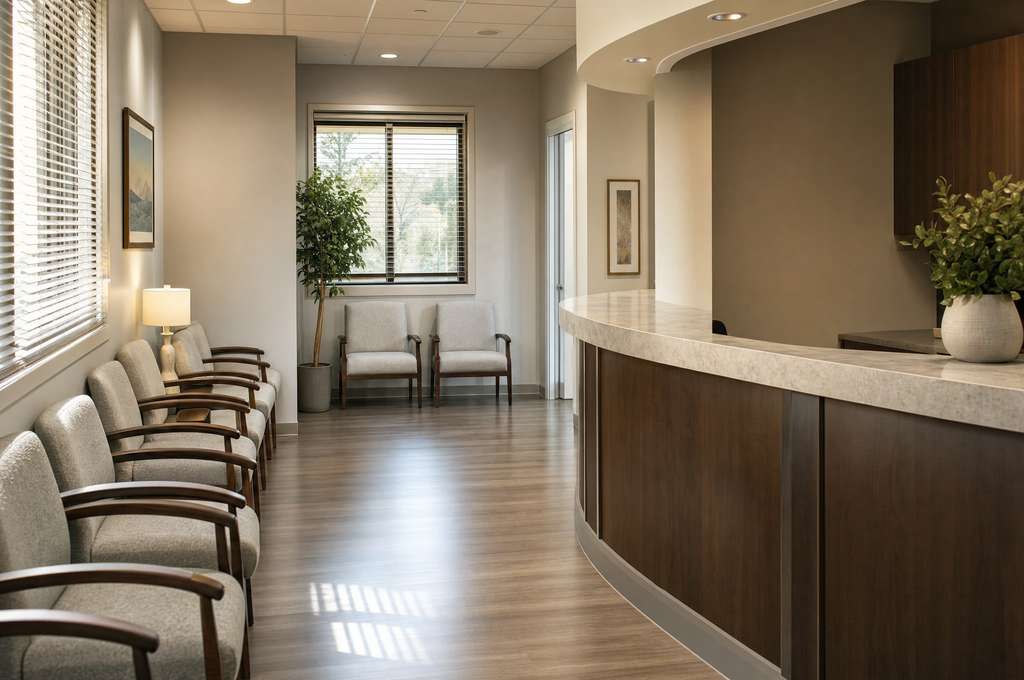
Medical office cleaning is judged on two things a general commercial crew is not trained for: what happens around patient information, and whether the exposure-control rules are understood. We clean medical and dental practices, clinics and specialist offices across Tampa Bay, and the sale here is crew training and confidentiality terms rather than a better product.
Facilities we service
-
-
-
-
-
-
-
-
-
-
-
-
-
-


Working where patient information is visible
A crew working a practice after hours is surrounded by protected health information: charts left on a desk, a screen nobody locked, paperwork in the check-in tray, names on an appointment board. No product protects any of that. Training, written confidentiality terms and a crew that stays the same from month to month do.
- Written confidentiality terms cover every crew member assigned to the account, and the practice can ask to see them.
- Crews are briefed on the practical rule rather than the legal one: do not read it, do not move it, do not photograph it, and report anything left exposed.
- Sharps containers, specimen areas and anything behind a locked door stay outside the scope unless the practice puts them in it.
- The same people return each visit, so nobody relearns your floor plan every few weeks.
- Where a client requires their own confidentiality agreement, it is signed before the first visit rather than after it.
Exposure control and where our scope ends
The OSHA bloodborne pathogens standard governs exposure control and sharps handling in clinical space, and it sets what a cleaning crew may and may not touch. A contractor who agrees to everything in the sales meeting is a contractor who will improvise at the point where improvising becomes a violation.
- Regulated medical waste and sharps disposal belong to your licensed waste vendor. We work around those containers and never handle their contents.
- Surfaces are cleaned first and disinfected second, because a disinfectant applied over soil does not do its job.
- EPA-registered hospital-grade disinfectants are used at their labeled contact time instead of being wiped dry on the way past.
- Terminal cleaning of procedure rooms follows the facility's own infection-control protocol, and it belongs in the scope before a price is written.
- Every boundary above is written into the scope rather than discovered on site.
What a medical office cleaning scope covers
Waiting rooms, exam rooms, restrooms and the check-in counter carry the visible standard. Floor care and detail work run on a longer cycle and are quoted on their own, so a nightly rate cannot quietly absorb them.
- Exam and treatment rooms: hard surfaces cleaned and disinfected, floors, waste to the practice's own streams.
- Waiting room and check-in: seating, counters, door furniture, glass, and the floor a patient walks in on.
- Restrooms: fixtures, dispensers and floors, at raised frequency through respiratory season.
- Staff areas: break room, kitchen and lab benches worked around rather than cleared.
- Periodic work: carpet extraction, hard-floor refinishing and high dusting on a stated cycle.
Medical Office Cleaning questions we get asked
What are the cleaning requirements for medical offices?
Three references do most of the governing: OSHA's bloodborne pathogens standard for exposure control, the CDC's environmental infection-control guidance for how clinical surfaces are cleaned and then disinfected, and the EPA's register of hospital-grade disinfectants for what gets used. The practical test of a medical cleaning crew is not which chemicals it carries but whether products are used at their labeled contact times and whether the crew knows what not to touch. A practice interviewing cleaning companies is entitled to ask how each of the three is trained for, and should be suspicious of an answer that arrives too quickly.
What is terminal cleaning?
The most rigorous level of healthcare cleaning: full decontamination of a clinical room between patients or after a known infection risk, done to a written protocol with the room out of service — every surface high and low, cleaned first and then disinfected. It belongs to hospitals, surgery centers and procedure rooms, and it is directed by the facility's own infection-control protocol rather than left to a vendor's judgment. Most medical offices do not need it routinely; what they need is disciplined daily cleaning with correct contact times, which is the scope this page describes. If your facility runs terminal cleans, that requirement belongs in the conversation before a scope is written.
Do your crews receive confidentiality training for medical offices?
Yes. Crews assigned to medical and dental accounts work under written confidentiality terms and are briefed on what they will encounter in a practice after hours: visible charts, unlocked screens, paperwork left at check-in, names on whiteboards and appointment displays. The briefing is practical rather than legal. do not read it, do not move it, do not photograph it, and report anything left exposed to the practice rather than tidying it away. Crews are also briefed on what not to touch at all: sharps containers, specimen areas, and anything behind a locked door that was not part of the agreed scope. Where a client requires a specific agreement in place, including their own confidentiality form, that is arranged before the first visit rather than after it. This is one of the areas where a stable crew matters more than a large one, because the same people learn your practice instead of starting over each visit.
Do you handle medical waste or sharps?
No. Regulated medical waste and sharps disposal are the responsibility of your licensed waste vendor, and that boundary is stated in our scope rather than left ambiguous. Our crews work around those containers and do not handle their contents.
Can you clean after hours so patients are not affected?
Yes, and most practices prefer it. Cleaning normally runs after the last patient leaves, using a documented key and alarm procedure for the site.