
Commercial Cleaning for Industrial and Manufacturing Facilities
Warehouse, distribution and light manufacturing cleaning scheduled around forklift traffic and production.
- Sealed concrete floors
- Works around production
- High dusting
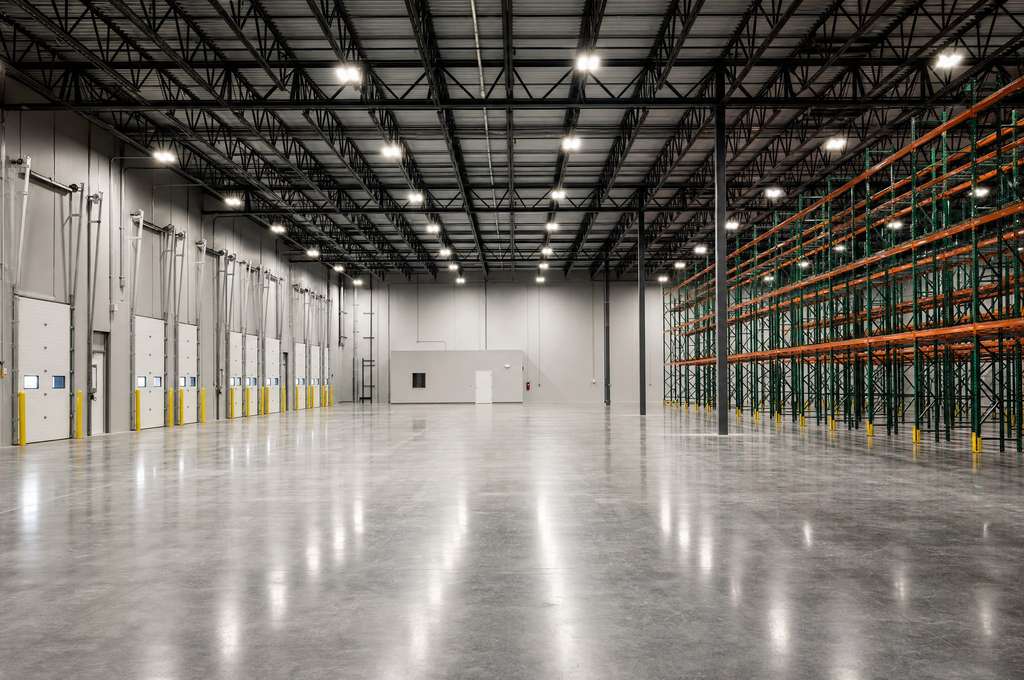
Industrial and warehouse cleaning is constrained by traffic and uptime before it is constrained by anything else. Forklift and pedestrian patterns dictate when work can happen at all, and a production floor buys uptime. A shutdown window that slips costs more than the clean was worth.
Facilities we service
-
-
-
-
-
-
-
-
-
-
-
-


Sealed floors, high steel and round-the-clock shifts
Warehouse and light manufacturing space works nothing like an office. The floors are sealed concrete, the dust comes from the operation rather than off people's shoes, the ceilings are high enough that high dusting needs lift equipment, and the building may never stop.
Oldsmar runs on exactly this base, with four full-service business and industrial parks in or beside the city, including 376,000 square feet of Class A space at the 580 Corporate Center. The U.S. 301 corridor south of Riverview and the Fruitville Road corridor east of I-75 in Sarasota are the same story.
- Sealed and polished concrete maintained on a program rather than the wax cycle a VCT floor wants.
- Auto-scrubbing along traffic lanes at the frequency forklift movement sets.
- High dusting of racking tops, beams, joists, pipework and light fittings, with fire-system components dusted around and never disturbed.
- Dock doors, staging areas and the aprons outside them.
- Offices, breakrooms and restrooms inside the building, cleaned daily like any other workplace.
What we work around rather than perform
Confined-space entry and lockout/tagout are certified activities. We schedule and work around them and do not perform them without the credential. The alternative is a crew improvising at the exact moment improvising is a safety violation.
- Confined-space entry stays with your certified personnel or a specialist contractor.
- Lockout/tagout is performed by your team before we clean the equipment around it.
- Fire-suppression heads, sprinkler lines and electrical panels are worked around, not cleaned.
- Where a genuine shutdown window is needed, it is planned against your production calendar, because a window that slips costs more than the clean was worth.
Cleaning a building that is still running
Most warehouse work happens zone by zone while the operation continues. Traffic patterns decide when a zone can be reached at all, which is why the schedule is built from your shift pattern rather than from ours.
- Zones sequenced around forklift and pedestrian routes instead of requiring a full shutdown.
- Daily areas held to a daily standard: restrooms, breakrooms, offices and dock doors.
- Racking, high steel and overhead work on a monthly to quarterly cycle, booked rather than deferred.
- A full top-down clean annually or at stocktake, when the racking is at its emptiest.
Warehouse Cleaning questions we get asked
How often should a warehouse be cleaned?
Daily where people live — restrooms, breakrooms, offices and dock doors — and on a cycle everywhere else: floors auto-scrubbed weekly or better along the traffic lanes, racking and high steel dusted monthly to quarterly, and a full top-down clean annually or at stocktake. The operation sets the true frequency more than the calendar does. Dust generation, forklift traffic and whether food or export product moves through the building all shorten the cycles. The failure pattern is always the same: the daily areas get done and the high work gets deferred until it is visible on the stock.
What is high dusting?
Cleaning everything above ordinary reach: racking tops, beams, joists, pipework, light fittings, duct exteriors and sprinkler heads. In a warehouse it is where most of the building's dust actually sits, and it needs lift equipment and planning rather than a longer pole. It gets bought for three reasons — air quality, inspection findings, and dust beginning to settle back onto stock — and it is scheduled work, not something a nightly crew does on the way past. Fire-system components are dusted around, never disturbed.
Can you clean while the warehouse is operating?
Usually yes, zone by zone, scheduled around forklift and pedestrian traffic rather than requiring a full shutdown. Where a genuine shutdown window is needed we plan it against your production calendar, because a window that slips costs you more than the cleaning.
Do you maintain sealed and polished concrete floors?
Yes. Sealed concrete is the dominant floor in warehouse and distribution space and it needs a maintenance program rather than the wax cycle a VCT floor wants.
Do your crews perform confined-space entry or lockout/tagout?
No. Both are certified activities with their own credentials. We schedule and work around them, and we say so up front rather than discovering the limit on site.